Singularity University CEE is very pleased to introduce the finalists for the Global Impact Competition CEE 2014:
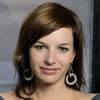
Anna Baróthy, Hungary
Project: CALTROPeCALTROPe is a lace-like dam structure which works like a catalyst for nature to form dams with the help of mangrove trees. It is built up by piling a single element into different structures. This modules’ blend is a special mixture of concrete, organic materials and local resources. The mangrove saplings are then planted into these structures. In 15-20 years, as the plants get stronger, the units start to crumble and the crumbs also become part of the sediment. The remains will be partly recycled by the plants as nutriments.
Izabela Witoszko, Poland
Project: Educating to adaptThis project will improve life of million people through allowing students to connect in a unique way through available and new technologies. It would allow easier and more effective communication between students from different disciplines and universities so they can start conversations and work on projects which are rich in diversity and challenging in their concept. By connecting more students in a different way, it would empower them and give a confidence to make changes in polish education, which is unfortunately quite conservative, very structured and very resistant to student’s voice. It will empower students who are active not only in their universities but also working on self-initiated projects, to aim to make the world a better place.
Pawel Jarmolkowicz, Poland
Project: HarimataGlobally there are two major health conditions that are spreading throughout our population. Autism for kids and depression for adults. Early diagnosis and intervention can improve lives of affected people but also reduce costs of lifelong care by 2/3. By making early diagnostics easy and widely available, we could affect millions of people. This technology can be put into any mobile application or game, where the diagnosis process would go on in the background automatically, without any professionals assistance.
By applying data mining and machine learning algorithms Harimata will develop models for identifying behavioural patterns which indicate a particular disorder.
Kamil Adamczyk, Poland
Project: NeurOnNeuroOn is a wearable sleeping mask that measures biological signals with three types of sensors, including: brain waves (EEG - electroencephalography), muscle tension (EMG - electromyography) and eye movements (EOG - electrooculography). All the data collected from a user’s sleep is transformed from analogue readings to digital analysis and sent via wireless interface fully compliant with Bluetooth 4.0 LE to a smartphone application. The mask itself looks simple, just like an ordinary sleeping mask. Nonetheless, inside it lies a powerful technology. Artificial intelligence which purpose is to analysis and process biological signals which are emitted each night – gigabytes of data which give endless possibilities of use.
Szabolcs Patonai, Hungary
Project: SeedlingThe mission of Seedling is to help parents with children between the ages of 1 to 6 years old to assess and assist the development of school-essential skills of their kids. Parents want to best provide for their kids. They also have a lot to do and can’t become experts in everything. Yet spotting even small developmental deficiencies or delays early on, and taking appropriate corrective action in time can have a major impact on the life of a person. Most issues only become apparent during the first real challenge in a child’s life: going to school for the first time. While typical deficiencies are only minor, they’re more difficult to remedy at this stage, as the process takes time and effort, which should at this point be focused on school. Seedling provides an accessible, scalable solution that will fit into any family’s life: a tablet app with professionally designed, age-appropriate developmental games.
Zsolt Robotka, Hungary
Project: SignAllThrough computer vision, signs can be recognized from images captured by cameras and processed by a PC or in the cloud, and in turn interpreted into clear sentences via a linguistic module. The software framework synchronizes images received from different types of sensors. The number of sensors (webcams, depth sensors) can be changed easily (the more sensor we use, the better view we have). SignALL currently requires one kinect, four ordinary web cams and an average PC. Our system has been designed in such a way as to allow for easy upgrade of the technological components of both hardware and software, thereby making good use of the continuous advancements in the technical world.
Synchronized images arrive in the image processing module, where hand shapes, poses, arms and even facial gestures are being recognized. The segmentation works both in space (skeleton matching) and in time (separation of signs) which produces separated 3D models of the gestures seen on the images. Segmentation is followed by the linguistic module, where segmented gestures are translated into signs with the help of the sign database (a dictionary, in fact), and the final linguistic processing assembles them into clear, human-like sentences.
Georgi Chipov, Bulgaria
Project: SmartHand700 million people have some kind of disability. Close to 50 Million people have lost their upper limb. Most of them live in the poorest places around the world. They cannot afford the $20,000 prosthetics available on the market today. SmartHand intends to disrupt the order of things by providing a much cheaper prosthetic device affordable for developing countries.
Stefan Ivanov, Bulgaria
Project: StepsssStepsss consists of a smart pair of insoles with embedded sensors that stream data wirelessly to the patient’s mobile device. The information is then processed to extract important events and patterns regarding his walking, which are delivered to a online servers via the internet. At the same time, a visualization about their behaviour is shown on their smartphone screen in real time. Upon receiving data from the patient, the online system uses it to build a “recovery diary” through informative and appealing visualizations. This diary is at a very detailed level and is also accessible for the patient’s physiotherapist through a website.